


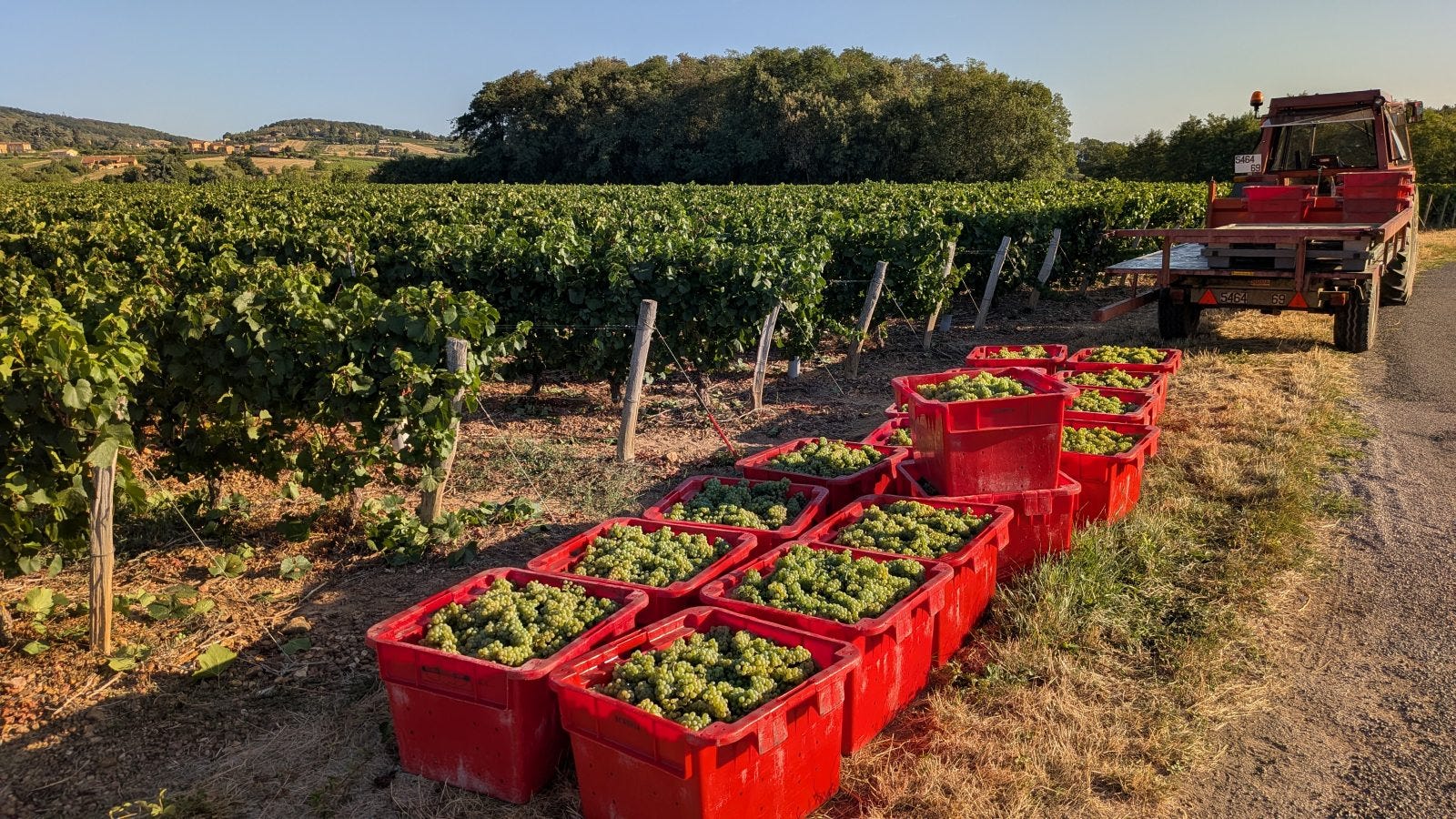
In 2025, according to French customs, 180,000 litres of red and rosé Beaujolais entered the Netherlands directly from France. In 2000 the figure stood at 4.62 million litres. These numbers cover direct exports registered by France, rather than total Dutch consumption. A bottle arriving via Belgium, for instance, falls outside them.
The change is impossible to miss all the same. On 17 July, the French statistics office Agreste published customs data showing a staggering 96 percent decline over 25 years. The obvious culprit is Beaujolais Nouveau; the figures point somewhere else.
Start with the Dutch picture. Those 180,000 litres amount to roughly 240,000 bottles, with a customs value of €1.26 million: €6.98 per litre, or €5.24 per 0.75-litre bottle before transport, excise duty, VAT, and margins. The graph runs steeply downward: from 46,200 hectolitres in 2000 via 22,100 in 2005 and 6,100 in 2015 to 1,800 in 2025. A few temporary upticks did nothing to change the direction. Wines from Beaujolais now account for 0.2 percent of all French wine entering the country.
A decline five times steeper than total French wine exports
Beaujolais is shrinking everywhere. Worldwide, exports of red and rosé Beaujolais fell from 672,100 to 127,400 hectolitres: down 81 percent. Total French wine exports contracted by 17 percent over the same 25 years. Beaujolais therefore lost almost five times as much volume as the French average; the region’s share of French wine exports slid from 4.4 to 1.0 percent.
Within that global decline, the Netherlands performed worse still. Our share of worldwide Beaujolais exports shrank from 6.9 to 1.4 percent. Le Beaujolais Nouveau, the November ritual that filled Dutch supermarket shelves in the nineties, all but disappeared with it.
The Nouveau test
Beaujolais Nouveau presents itself as the prime suspect, and for the Dutch supermarket that picture probably holds. The figures from Inter Beaujolais, the regional trade association, tell a different story.
The organisation’s annual press releases report Nouveau exports of 74,000 hectolitres in 2019, 65,000 in 2021 and 48,500 in 2022. Measured against total Beaujolais exports, Nouveau comes out at roughly 30 percent at every available reference point (2019: 33.9 percent, 2021: 30.3, 2022: 28.8). For 2002 the interprofession reported 25.5 million export bottles of Nouveau, equal to some 191,000 hectolitres: 31 percent of total exports.
That share stayed remarkably stable. At the available reference points, roughly three in every ten litres of exported Beaujolais are Nouveau and seven are other Beaujolais: standard Beaujolais and Beaujolais-Villages, plus the ten Crus. Work that through, and about one third of the total export loss between 2002 and 2022 falls to Nouveau, two thirds to the rest. Both categories lost substantial volume, while their mutual ratio held steady: Nouveau did not shrink faster than the rest.
The qualitative rehabilitation of the Crus, from Fleurie to Morgon, remains invisible in the customs data for now.
The French table is absent too, though less so
Did only foreign markets abandon the region, or did French drinkers as well? The French agricultural agency FranceAgriMer publishes annual till data from market researcher Circana: French consumption of still wine is falling. In French hypermarkets and supermarkets, Beaujolais sales dropped from 126,000 hectolitres in 2011 to 90,000 hectolitres in 2024, a decline of 29 percent.
Substantial, and yet relatively modest. Over exactly the same window, 2011 to 2024, exports collapsed from 313,700 to 135,400 hectolitres: down 57 percent. Exports therefore shrank roughly twice as fast as French sales through hypermarkets and supermarkets. These channels cover the greater part of French at-home sales. Beaujolais probably has a bigger brand and positioning problem abroad than at home. Conclusive proof it is not: restaurants, independent wine shops and cellar-door sales fall outside this data.
The price falters
For years, one consolation offset the volume loss: price. The average customs value of exported Beaujolais rose from €3.16 per litre in 2002 to a peak of €7.16 in 2023. Less volume, more value: the region appeared to benefit.
Since that peak, the story has faltered. Average customs value slipped to €7.12 per litre in 2024 and €6.98 in 2025. The first five months of 2026 add a further warning signal: export volume fell 4.7 percent, while value dropped 13.4 percent. Average customs value consequently came in 9.2 percent lower, at €6.76 per litre. Drawing conclusions here would be premature, since more than a third of the annual volume ships only in October and November with the Nouveau consignments, while product mix also distorts the average value per litre.
Total Beaujolais export revenue fell from €193.6 million in 2002 to €88.9 million in 2025, well over a halving in nominal euros. Adjusted for more than twenty years of inflation, a real revenue loss of some 70 percent remains. Rising average customs value softened that loss, though without a breakdown by wine type, it stays unclear how much of it represented a genuine increase in value.
The region chooses white
In Villefranche, Inter Beaujolais has made white wine a strategic priority. Beaujolais Blanc, made entirely from Chardonnay, currently represents about 4 percent of production: some 20,000 to 25,000 hectolitres out of more than 590,000. Inter Beaujolais wants to triple that volume within five to ten years, to 75,000 hectolitres.
That extra white has to come from two movements.
The first is reclaiming. Much Chardonnay from Beaujolais currently leaves the region as Bourgogne Blanc or Crémant de Bourgogne. Around half of all Crémant de Bourgogne comes from Beaujolais vineyards. ‘Arrêtons de faire des sous-produits de la Bourgogne’, said Inter Beaujolais president Jean-Marc Lafont, Bardet’s successor, on the subject.
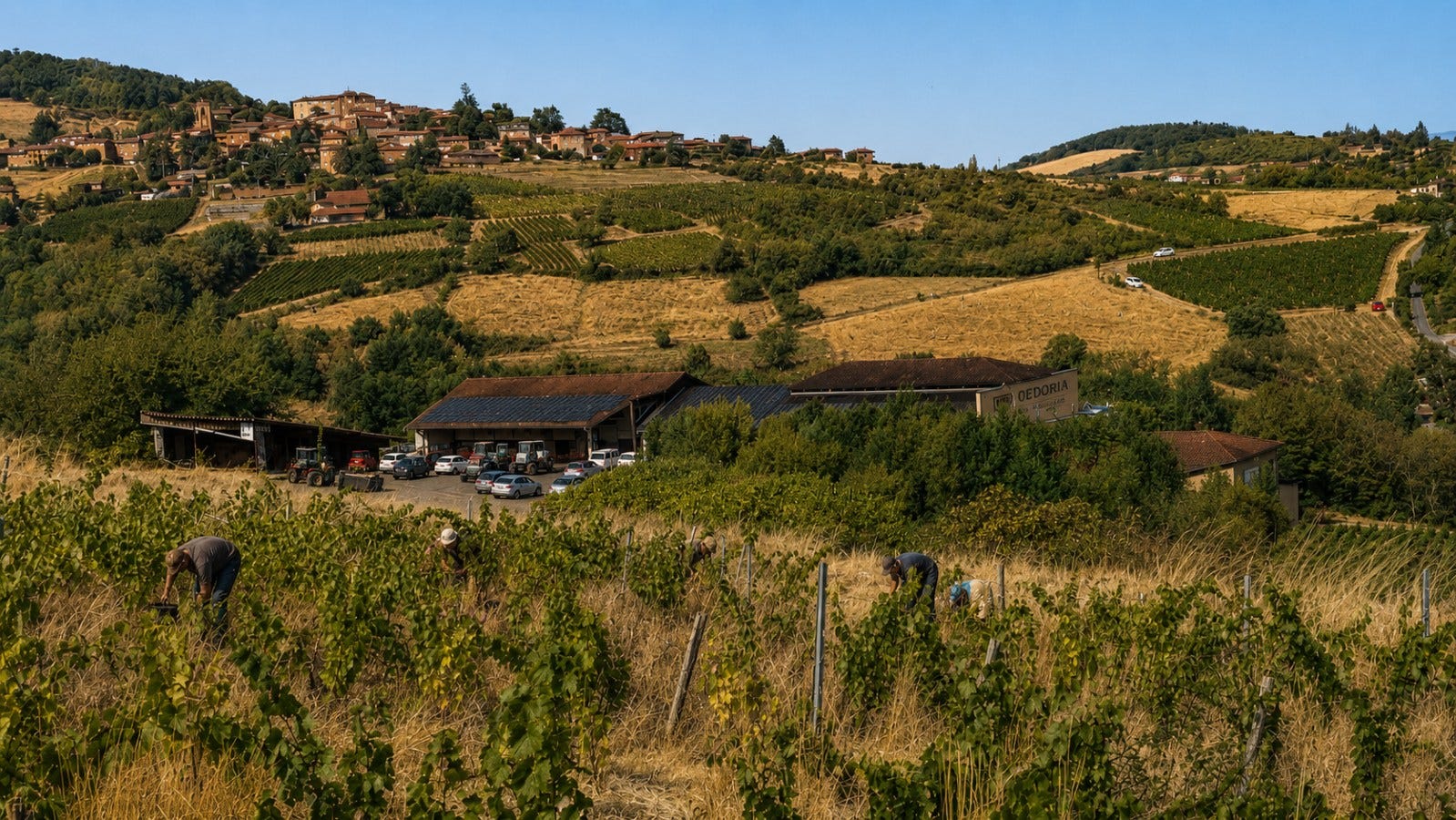
The second is replanting. In the south, particularly in the area known as the Pierres Dorées, restructuring is replacing Gamay with Chardonnay. That grape suits the limestone-rich soils there.
The region is thus building a second commercial pillar with white. Should Chardonnay genuinely replace Gamay at scale, potential red volume will fall further still. For the Netherlands that means two things. A return of red Beaujolais to its old supermarket volume looks unlikely.
At the same time, an opportunity opens up. If the planned tripling succeeds, Beaujolais Blanc will grow within ten years into a significant export category, precisely in a market where white overtook the combined red and rosé category in 2024. In the United States, the United Kingdom, Finland and Sweden, demand for white Beaujolais is already rising.
The wider pattern
The decline of Beaujolais belongs in a broader story. Total French wine exports to the Netherlands shrank by a third since 2000, against a nearly doubled price per litre, and since 2024 France ships more white than red and rosé to the Netherlands. More than nine tenths of that contraction falls to red and rosé; Beaujolais, made almost entirely from Gamay, ranked among the hardest-hit categories. The full export analysis appears in a separate article: The French wine miracle: the accounting trick that stopped working.
What the figures leave open
Four caveats accompany this analysis. Customs data measure direct exports; a bottle reaching the Netherlands via a Belgian distribution centre counts as an export to Belgium, while transit through Rotterdam distorts the picture in the opposite direction. The customs category also shifted slightly in definition around 2010.
The public Agreste series does not distinguish Nouveau separately, although the detailed French customs nomenclature contains more subdivisions than Agreste publishes. The Nouveau split in this article therefore comes from Inter Beaujolais itself.
Was Beaujolais Nouveau simply a shrinking product within a shrinking category? Or did Nouveau, once a celebration, also damage the name Beaujolais as a whole? The volume figures neither confirm that second hypothesis nor refute it. The answer lies with importers, buyers and consumer research, and that is worth a further article. Meanwhile, one thing is certain: the region makes better wine than it did twenty years ago, and the market has yet to be convinced.
Change begins in the vineyard
The export graph shows a wine region losing ground for twenty-five years. On my visits to Beaujolais I see something else. I go there a few times a year. And there I meet many growers roughly between 25 and 45 who have taken over the family estate. They are well-trained, technically curious, and feel free to choose between traditional and new vinification methods.
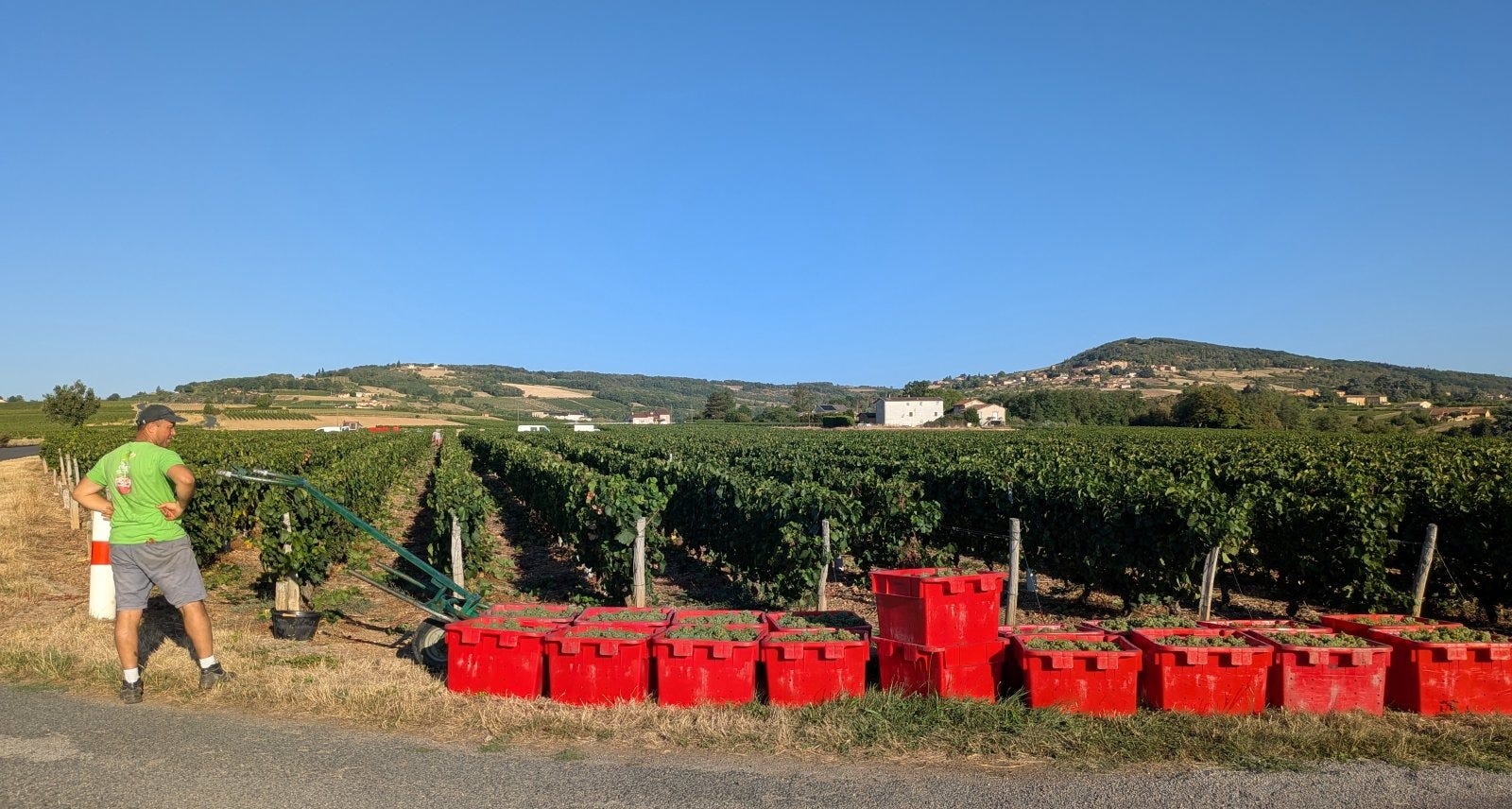
Tradition serves mainly as a source of knowledge, with room for selection and adaptation. Alongside classic Cru Beaujolais, these producers make lighter, fresher reds that can be served cooler. They experiment with vinification methods and give white ever more room. They look at what the grape, the soil, and the climate make possible, with the consumer always in mind. That consumer now goes for taste and wine style more than for image and reputation. Many traditional wine regions still have that shift ahead of them.
Research for future generations
SICAREX Beaujolais and the IFV are investigating at Château de l’Éclair which grape varieties suit the changing climate while offering sufficient resistance to fungal disease. The trial plots hold 178 grape varieties, among them Syrah, Viognier and resistant selections such as Coliris. The researchers examine climate adaptation, carbon reduction and consumer expectations. They are already searching for varieties that will perform well in Beaujolais twenty years from now.
Knowledge of the soil has expanded sharply as well. Between 2009 and 2018, more than 15,000 soil probes were carried out and nearly a thousand profile pits dug. The researchers ultimately mapped more than 300 soil variants. Since 2018 Beaujolais has belonged to the UNESCO Global Geoparks. Few wine regions have their subsoil described in such detail. The next step: translating that knowledge into recognisable wines and into a story that lands beyond the region.
Lyon sits practically on the doorstep. Wine, restaurants, auberges, gîtes, tasting rooms and sales at the estate give Beaujolais an economic perspective reaching well beyond the supermarket shelf. Some producers are already building out that model. A greater share of the margin stays on the estate as a result, together with direct contact with visitors and buyers.
The region leaves an opportunity largely untouched. Beaujolais and Lyon together form the culinary heart of France, and that connection barely surfaces in how the wine is presented. Since Lyon administratively left the département of Rhône in 2015, city and region have moreover promoted themselves through separate organisations. Initiatives such as Beaujonomie point the right way, though execution rests mainly with the growers themselves. They are the ones who can carry the strength of the regional kitchen outward.
The market follows slowly
The biggest obstacle may sit in the memory of the market. Dutch consumers still react to Beaujolais with the same association: ‘That’s the Nouveau one, isn’t it?’ The poor image of thin, hastily made primeur wines from the past holds stubbornly firm.
Nouveau itself deserves a fresh assessment too. In 2026, I tasted bottles from 2023, 2024 and 2025 that still drank excellently. They had plenty of fruit and freshness left, with low tannin and a supple structure. That low tannin level is exactly what makes Nouveau immediately approachable, while these bottles remarkably held up convincingly even after one to three years.
The style remains light, fruit-driven and intended for early drinking, though that has long since stopped meaning thin or fleeting. The better producers now make Nouveau with enough concentration and freshness to stay interesting well past the third Thursday in November.
Behind that, the whole region continues to develop. The Crus grow more precise, white Beaujolais gains weight, and producers seek a more deliberate connection with a consumer who values freshness, drinkability and moderate alcohol. The wines changed faster than their reputation.
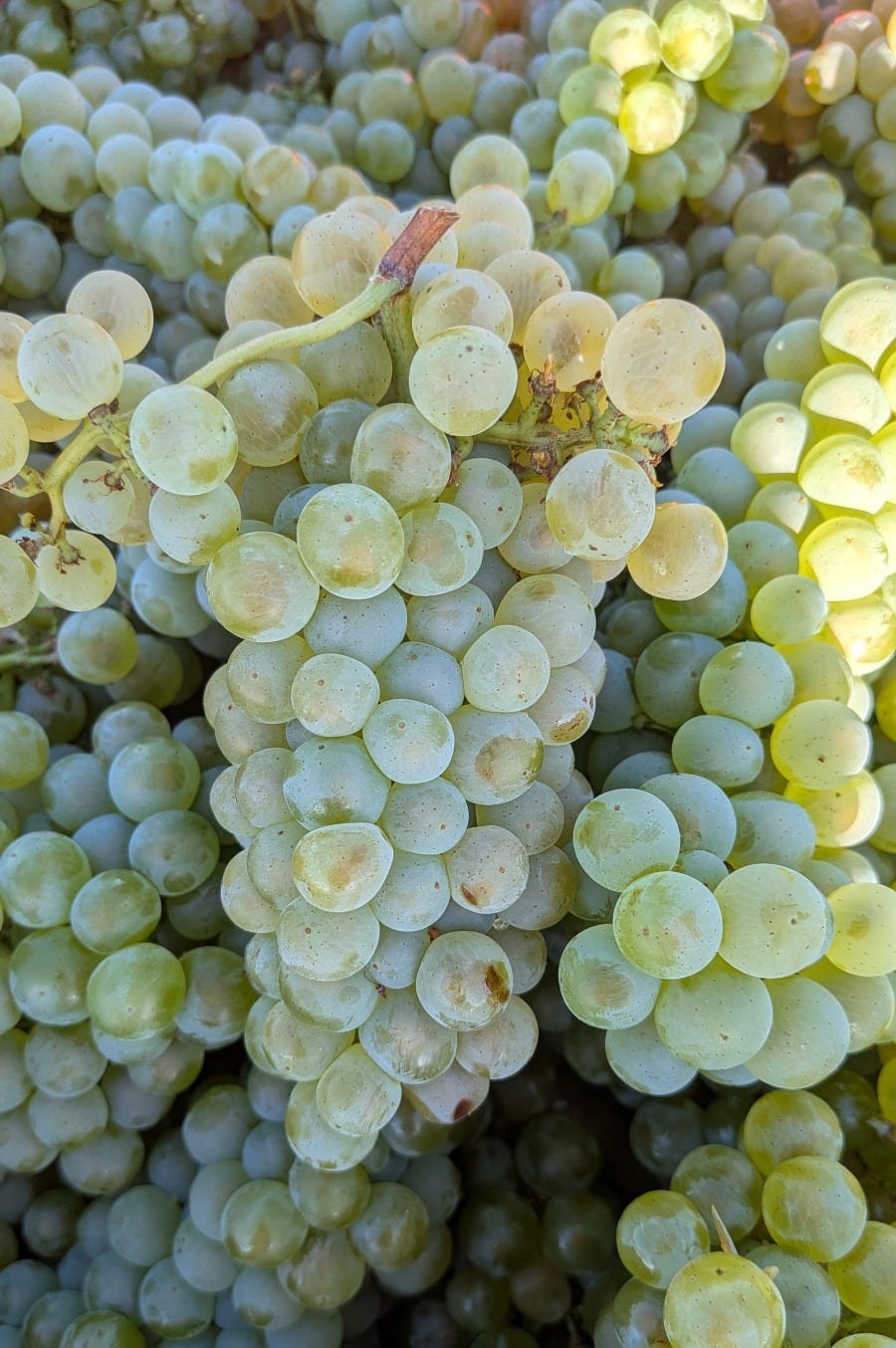
Price helps as well. In 2026, I found many Beaujolais Crus on Dutch shelves between €10 and €20 per bottle. That makes the step from curiosity to purchase easier for the buyer. For a sum that elsewhere increasingly buys a simple regional wine, they get to know Morgon, Fleurie, Chiroubles or Moulin-à-Vent.
Recovery starts small
In the Netherlands, small concrete signs of renewed interest are emerging. Wijnkoperij Meijrink in Velp carries all ten Beaujolais Crus from seven domaines and emerged as the strongest bricks-and-mortar specialist in my survey of the Beaujolais offering in Dutch wine shops.
In November 2024, owner Peter Meijrink revived the traditional midnight launch of Beaujolais Nouveau. The shop opened at 23:30; from midnight visitors could taste and buy the new vintage. The third Thursday of November regained the character of a genuine wine launch.
The examples are small and scattered, yet they all point the same way. A new generation of growers is taking over estates, organised research supports viticulture through a changing climate, terroir knowledge grows steadily more precise, gastronomy draws visitors, and many Crus remain affordable. In the export figures almost none of this shows up yet. The conditions for recovery are nonetheless in place.
That is why I am willing to state this expectation: the recovery of the French wine sector could begin in Beaujolais. The region is adjusting its offering structurally to the changing consumer. Researching new varieties, expanding white, making lighter reds you can drink cool, reinventing Nouveau. Climate change is of course responsible for part of those choices. Yet ultimately, it comes down to the consumer because the consumer judges the result. And that is precisely what Beaujolais is steering by.
The Crus meanwhile are working within the existing rules on an extension of the hierarchy: in 2023 Fleurie became the first to submit a Premier Cru dossier to the INAO. Brouilly, Moulin-à-Vent and Juliénas followed. That procedure will probably take five to ten years, which matches the pace at which consumer habits genuinely shift.
The first indications I see among the growers, in the vineyards, the cellars and the trial plots. Cautiously, the wines of Beaujolais are appearing on Dutch shelves again.
Sources: Agreste / Direction générale des douanes et droits indirects (DGDDI), dataset D_0015, ‘Echanges extérieurs de vins de la France’, updated 17 July 2026; Inter Beaujolais, dossiers de presse Beaujolais Nouveaux 2020, 2022 and 2023; FranceAgriMer / Symphony IRI, ‘Bilan 2011 des ventes de vins tranquilles en grande distribution’; FranceAgriMer / Circana, ‘Ventes et achats de vins tranquilles, bilan 2024’; Vitisphere; Réussir Vigne. Analysis: Winecastr.com.
Frequently asked questions
How much Beaujolais does the Netherlands import? In 2025 French customs registered 180,000 litres of red and rosé Beaujolais shipped directly to the Netherlands, roughly 240,000 bottles. This is not a pure consumption figure: supply via other EU countries is missing, while part of the registered volume leaves the Netherlands again through re-export.
Is Beaujolais Nouveau behind the decline? Partly. At the available reference points, Nouveau accounts for around 30 percent of Beaujolais exports, and that share stayed stable. Of the total export loss between 2002 and 2022, roughly two thirds falls to the other Beaujolais wines, Crus included.
Do the French still drink Beaujolais? Less than they used to: supermarket sales fell 29 percent between 2011 and 2024. Exports shrank twice as fast over the same period.
Is Beaujolais getting more expensive? At the French border, quite the opposite. Average customs value rose from €3.16 per litre in 2002 to a peak of €7.16 in 2023, then slipped to €6.76 in early 2026. Dutch shoppers notice little of this: transport, excise duty, VAT, and margins come on top, and those have only been rising in recent years.
Will there be more white Beaujolais? Yes, if the region has its way. Inter Beaujolais wants to triple production of Beaujolais Blanc, currently 4 percent of the total, to 75,000 hectolitres within five to ten years. Chardonnay is partly replacing Gamay in the process.
This article first appeared in Dutch on Winecastr.com. The English version was produced with AI assistance and edited by the author.
This article first appeared in Dutch on Winecastr.com: Beaujolais verdween bijna uit Nederland. Is er een weg terug?
Reinier Broeks is a Dutch investigative wine journalist and registervinoloog, the Netherlands' certified wine expert title. Drawing on a background in business economics, he covers the wine world from an economic and cultural angle, on a mission to wake up the industry before the consumer does it the hard way. And the occasional bottle worth arguing about. His Dutch-language work appears at Winecastr.com.